Free U.S. Shipping on orders $35+ ● No Sales Tax outside California

Free U.S. Shipping on orders $35+ ● No Sales Tax outside California
$4.99
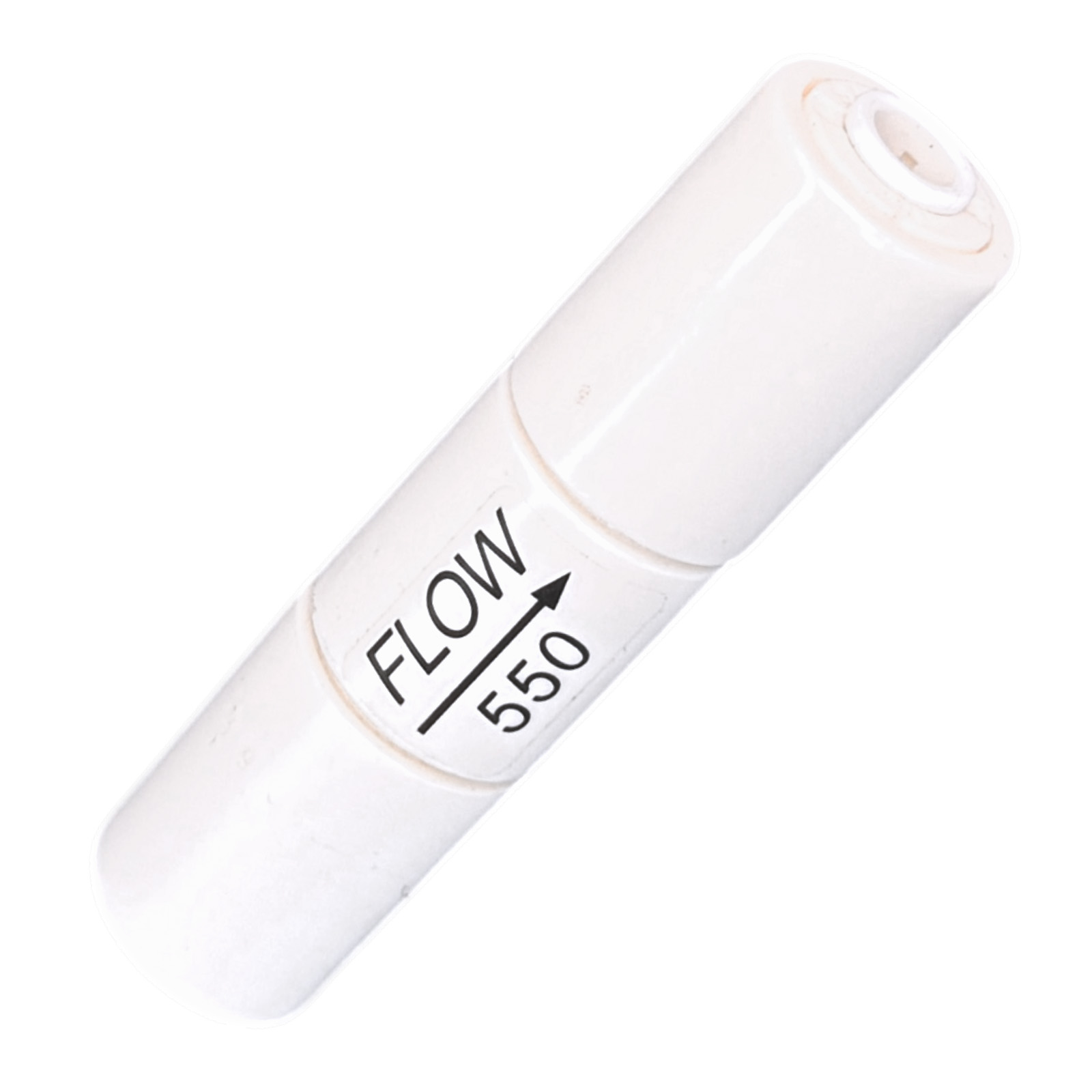
Inline waste water flow restrictor for reverse osmosis systems — regulates drain flow to maintain correct membrane pressure, improve system efficiency, and extend membrane life. Choose the size that matches your membrane’s GPD rating.
The flow restrictor installs on the waste (drain) line of your RO system and controls how much water goes to drain versus how much gets pushed through the membrane as purified water. Getting this ratio right is essential — too little restriction and the membrane doesn’t build enough pressure to filter effectively; too much and the membrane is over-pressured, reducing its life.
Available in four flow rates (450, 500, 550, and 650 mL), each matched to a range of membrane GPD ratings. Selecting the correct restrictor for your membrane is the single most important factor in RO system performance and membrane longevity.
| Restrictor | Membrane GPD |
|---|---|
| 450 mL | 50–75 GPD |
| 500 mL | 75–100 GPD |
| 550 mL | 100–150 GPD |
| 650 mL | 150–200 GPD |
Not sure which GPD membrane you have? Check your membrane label or see our RO Membranes page.
| Type | Waste (drain) water flow restrictor |
| Flow rate options | 450 / 500 / 550 / 650 mL |
| GPD coverage | 50–200 GPD |
| Installation | Inline on waste water (drain) line |
| Material | Corrosion-resistant |
| Use | Cold water only |
| Brand | MyWaterClub |
| SKU | RESTRICTOR (select size) |
| Weight | N/A |
|---|---|
| Dimensions | N/A |
| Restrictor size | 450 ML, 500 ML, 550 ML, 650 ML |
You must be logged in to post a review.
Reviews
There are no reviews yet.